
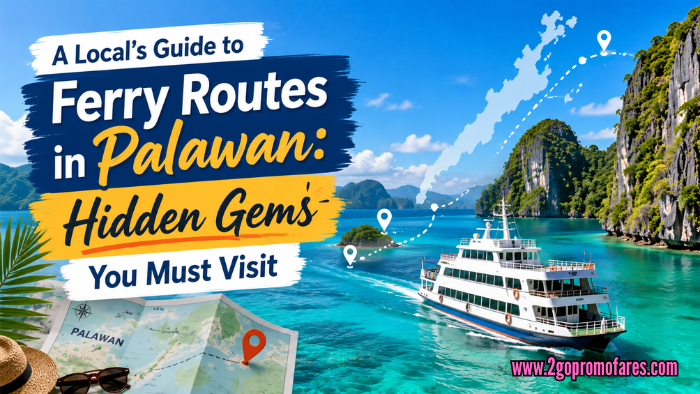
Palawan is one of those places where the journey can be just as beautiful as the destination. With its turquoise waters, limestone cliffs, quiet fishing villages, and island communities, traveling by sea gives you a different kind of experience that flights and land trips cannot fully offer. If you are planning to explore the province beyond the usual tourist stops, learning about Palawan ferry routes can help you discover hidden gems, save travel time, and enjoy a more scenic adventure.
Many travelers think of Palawan only in terms of Puerto Princesa, El Nido, or Coron. These are beautiful and worth visiting, but Palawan is much wider, quieter, and more diverse than the usual travel posters show. Among its famous destinations are smaller ports, peaceful beaches, remote island towns, and local boat routes that connect communities across the sea. Some routes are served by passenger ferries, while others use motorized bancas, tourist boats, or local sea transport depending on the destination.
This guide is written for travelers who want to experience Palawan in a slower and more meaningful way. Whether you are planning a first-time trip or returning for another island adventure, these ferry and boat routes can help you build a more exciting itinerary.
Why Explore Palawan by Ferry?
Ferry travel in Palawan is not just transportation. It is part of the adventure. The province is surrounded by water, and many of its best destinations are reached by boat. Riding a ferry or local banca lets you see the islands from a different perspective: calm bays, distant cliffs, fishing boats, coastal villages, and sunrise or sunset views over the sea.
Using Palawan ferry routes can also make your itinerary more flexible. Instead of flying back to Manila or taking long land transfers every time you move to another destination, you can connect places by sea. For example, the El Nido to Coron route is one of the most popular sea connections in northern Palawan. Atienza Interisland Ferries lists daily Coron to El Nido and El Nido to Coron trips on its schedule page, with the route shown at ₱2,600 for MV November Cattleya at the time of checking. Always confirm the latest schedule and fare before booking because ferry operations may change due to weather, port advisories, and seasonal demand.
Ferry travel also gives budget travelers more options. Some routes may take longer than flying, but they can be more scenic and practical, especially when you want to visit several islands in one trip. For backpackers, barkada travelers, couples, and families who enjoy slow travel, Palawan by sea can feel more personal and memorable.
Main Palawan Ferry Routes to Know
Before building your itinerary, it helps to understand the main travel areas in Palawan. Puerto Princesa is often the gateway for central and southern Palawan. El Nido is the jump-off point for Bacuit Bay and the northern mainland. Coron, located in the Calamianes group, is a major island-hopping and diving destination. San Vicente and Port Barton are quieter coastal areas between Puerto Princesa and El Nido. Cuyo and Balabac are more remote, making them ideal for travelers looking for lesser-known destinations.
Some routes are formal ferry routes, while others are boat transfers or sea tourist transport. For example, San Vicente’s tourism office notes that Port Barton can be reached by registered motorized bancas from Sabang, Puerto Princesa, with a travel time of around four hours. It also notes that hiring a boat from El Nido to Port Barton or Poblacion, San Vicente is possible, with an approximate travel time of six hours.
This is why travel planning for Palawan should be flexible. A “ferry route” in Palawan may mean a fast craft, a passenger vessel, a RoRo, a chartered boat, or a local banca, depending on where you are going.
Route 1: Puerto Princesa to Sabang and the Underground River Area
Puerto Princesa is usually the first stop for many travelers because it has an airport, hotels, restaurants, and travel agencies. While the city itself is on the mainland, one of its most famous attractions involves a boat transfer: the Puerto Princesa Underground River.
The Puerto Princesa Subterranean River National Park is recognized by UNESCO for its limestone karst landscape, underground river, biodiversity, and mountain-to-sea ecosystem. UNESCO describes the underground river as flowing directly into the sea, with its lower portion affected by tidal influences. The official Puerto Princesa Underground River page also describes the park as having an 8.2-kilometer underground river and a limestone or karst landscape with a complex cave system.