
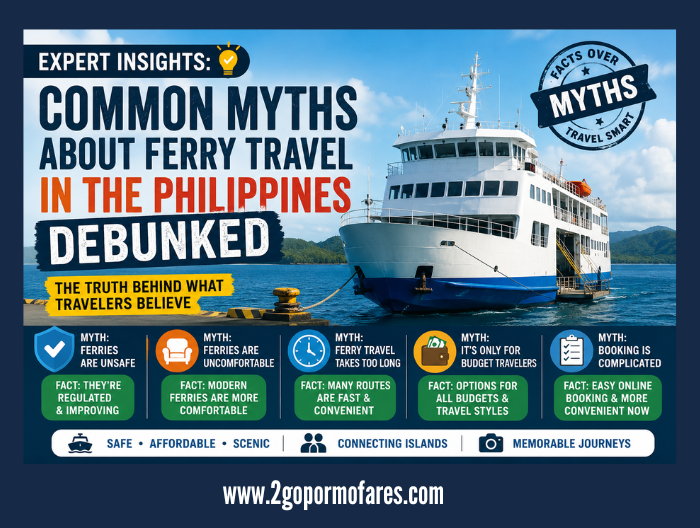
The Philippines is world-famous for its breathtaking islands, tropical beaches, and vibrant coastal culture. As an archipelago with more than 7,000 islands, sea transportation plays an essential role in connecting people and destinations across the country.
Despite the importance of maritime travel, many travelers — especially first-time tourists — still hesitate to ride ferries due to common misconceptions and outdated stereotypes. Some believe ferry travel is unsafe, uncomfortable, inconvenient, or only suitable for budget travelers.
However, modern ferry travel in the Philippines has significantly improved over the years. Today’s ferry operators offer better vessels, improved safety systems, digital booking platforms, modern amenities, and more comfortable travel experiences than ever before.
In this article, we’ll debunk the most common myths about ferry travel in the Philippines and reveal the truth behind inter-island sea travel. Whether you’re a local commuter, backpacker, family traveler, or foreign tourist, this guide will help you better understand why ferry travel remains one of the best ways to explore the country.
Why Ferry Travel is Important in the Philippines
Before diving into the myths, it’s important to understand why ferries are so essential in the Philippines.
Unlike many countries connected by highways and rail systems, the Philippines relies heavily on maritime transportation because of its island geography.
Ferries help:
- Connect remote islands
- Support tourism
- Transport goods and cargo
- Provide affordable travel options
- Strengthen local economies
Millions of Filipinos travel by ferry every year for work, education, business, and leisure.
Myth #1: Ferry Travel in the Philippines is Unsafe
One of the biggest misconceptions about ferry travel is that it is automatically dangerous.
The Truth
Modern ferry operators in the Philippines now follow stricter maritime safety regulations compared to previous decades.
Many vessels today are equipped with:
- GPS navigation systems
- Life-saving equipment
- Emergency communication systems
- Weather monitoring technology
- Improved vessel maintenance programs
The Philippine Coast Guard also conducts inspections and weather monitoring before allowing vessels to sail.
Safety Improvements in Recent Years
The maritime industry has significantly improved:
- Passenger safety protocols
- Crew training
- Vessel modernization
- Emergency preparedness
- Port management systems
Reputable ferry operators prioritize passenger safety and comply with government regulations.
How Travelers Can Stay Safe
Passengers can also improve their safety by:
- Choosing trusted ferry companies
- Monitoring weather updates
- Following crew instructions
- Arriving early for organized boarding
- Wearing proper footwear during boarding
Like any form of transportation, safety largely depends on proper preparation and responsible travel.
Myth #2: Ferry Travel is Only for Budget Travelers
Many people assume ferries are only for backpackers or travelers trying to save money.
The Truth
While ferries are indeed budget-friendly, they also cater to travelers seeking comfort and premium experiences.
Modern ferries now offer the following:
- Air-conditioned accommodations
- Private cabins
- Family rooms
- VIP suites
- Restaurants and lounges
- Entertainment facilities
Some vessels even resemble mini cruise ships.
Luxury and Comfort Options
Long-distance operators such as 2GO Travel provide upgraded accommodations suitable for:
- Families
- Business travelers
- Tour groups
- Couples
- International tourists
Travelers can choose accommodations based on both budget and comfort preferences.
Myth #3: Ferry Travel Takes Too Long
Some travelers avoid ferries because they believe sea travel wastes too much time.
The Truth
Travel duration depends on:
- Route distance
- Vessel type
- Weather conditions
Fast craft ferries now make many routes surprisingly quick.
Examples of Fast Ferry Routes
Cebu to Bohol
- Around 2 hours
Iloilo to Bacolod
- Approximately 1 hour
Batangas to Puerto Galera
- Around 1 to 2 hours
For shorter routes, ferries can actually be more practical than flights once airport waiting times are considered.
Overnight Ferries Can Save Time
Long-distance overnight ferries allow travelers to:
- Sleep during travel
- Save on hotel accommodations
- Maximize daytime itineraries
This makes overnight ferry travel both practical and economical.
Myth #4: Ferry Travel is Always Uncomfortable
Older perceptions often describe ferries as crowded and uncomfortable.
The Truth
Many modern ferries now offer the following:
- Reclining seats
- Air-conditioned lounges
- Comfortable bunk beds
- Private cabins
- Dining areas
- Wi-Fi on selected vessels
Travel comfort depends largely on the accommodation class chosen.
Choosing the Right Accommodation
Economy Class
Affordable but basic.
Tourist Class
Good balance between comfort and price.
Cabin Accommodations
Ideal for overnight and long-distance travel.
VIP Suites
Premium comfort with private amenities.
Travelers can customize their ferry experience according to their preferences and budget.
Myth #5: Ferry Booking is Complicated
Some people think ferry tickets are difficult to purchase or reserve.
The Truth
Booking ferry tickets in the Philippines has become much easier thanks to digital platforms and online booking systems.
Many operators now offer the following:
- Online reservations
- Mobile booking apps
- E-tickets
- Digital payments
- Customer support hotlines
Benefits of Online Ferry Booking
Travelers can:
- Compare schedules
- Secure promo fares
- Avoid long terminal lines
- Reserve preferred accommodations
- Access real-time updates
This has made ferry travel more convenient than ever.
Myth #6: Ferries Are Always Delayed
Weather-related delays have contributed to the belief that ferry schedules are unreliable.
The Truth
While the weather can affect schedules, most ferry trips operate on time during normal conditions.
Modern ferry operators now use the following:
- Better weather forecasting
- Improved communication systems
- Enhanced route monitoring
Delays usually occur only during:
- Typhoons
- Rough sea conditions
- Severe weather warnings
Why Weather Delays Are Actually a Good Sign
Cancellations during dangerous conditions indicate that operators are prioritizing passenger safety.
This is a responsible practice rather than poor service.
Myth #7: Ferry Travel is Boring
Some travelers think long ferry rides are dull and uneventful.
The Truth
Ferry travel can actually become one of the most memorable parts of a Philippine adventure.
Passengers can enjoy:
- Stunning ocean views
- Beautiful sunsets
- Island scenery
- Sea breeze relaxation
- Social interactions with fellow travelers
For many travelers, ferry rides provide a slower and more immersive travel experience.
Myth #8: Flights Are Always Better Than Ferries
Many tourists automatically choose flights without considering ferry alternatives.
The Truth
Flights are faster, but ferries offer several unique advantages.
Advantages of Ferry Travel Over Flights
Lower Costs
Ferries are usually more affordable.
Larger Baggage Allowance
Helpful for long-term travelers.
Scenic Experience
Sea travel offers beautiful landscapes.
Access to Smaller Islands
Some destinations do not have airports.
Vehicle Transportation
RoRo ferries allow cars and motorcycles.
Best of Both Worlds
Many experienced travelers combine the following:
- Domestic flights for long distances
- Ferries for island hopping
This creates a balanced and flexible travel itinerary.
Myth #9: Ferry Travel is Only for Locals
Some foreign tourists mistakenly think ferries are not tourist-friendly.
The Truth
Many ferry operators now cater heavily to tourism.
Tourist-friendly features include:
- English-speaking staff
- Online booking systems
- Tourist assistance desks
- Comfortable accommodations
- Guided travel packages
Popular tourist ferry routes are designed specifically with travelers in mind.
Myth #10: All Ferries Offer the Same Experience
Not all ferry operators are identical.
The Truth
Different operators provide:
- Different vessel types
- Varying amenities
- Different accommodation levels
- Different travel experiences
Researching operators helps travelers find the best option for their needs.
Expert Tips for a Better Ferry Travel Experience
Now that we’ve debunked the myths, here are some expert tips for smoother ferry travel in the Philippines.
1. Book Early
Booking in advance helps secure:
- Better accommodations
- Lower fares
- Preferred schedules
2. Travel During Dry Season
The best ferry travel months are usually:
- November to May
Sea conditions are calmer, and schedules are more reliable.
3. Bring Essentials
Recommended travel items:
- Power banks
- Snacks
- Travel pillow
- Motion sickness medicine
- Light jacket
4. Choose Trusted Operators
Stick to reputable ferry companies with strong safety records.
5. Arrive Early at the port
Ports can become crowded, especially during holidays.
Arriving 2–3 hours before departure is ideal.
Popular Ferry Routes for Tourists
Many ferry routes are now major tourist attractions themselves.
Cebu to Bohol
One of the country’s most popular island routes.
Batangas to Puerto Galera
Perfect for beach lovers and divers.
Manila to Coron
A scenic route toward Palawan adventures.
Surigao to Siargao
Popular among surfers and backpackers.
Iloilo to Guimaras
Short and affordable island access.
Future of Ferry Travel in the Philippines
The Philippine maritime industry continues evolving with the following:
- Modernized vessels
- Better ports
- Enhanced safety measures
- Digital ticketing systems
- Improved tourism integration
Government and private investments continue improving passenger experiences across the country.
Why Ferry Travel Deserves More Appreciation
Ferry travel offers something that flights often cannot:
- Slower, immersive travel
- Authentic local experiences
- Stunning coastal scenery
- Affordable transportation
- Unique island adventures
For many travelers, the journey itself becomes part of the destination.
Final Thoughts
Many myths surrounding ferry travel in the Philippines are based on outdated perceptions and misinformation. Today’s ferry industry is far more modern, organized, and traveler-friendly than many people realize.
From improved safety standards and digital booking systems to comfortable accommodations and scenic island routes, ferry travel remains one of the best ways to experience the beauty of the Philippines.
Whether you are exploring Cebu, Palawan, Bohol, Siargao, Mindanao, or the Visayas, ferries provide an affordable, memorable, and culturally rich way to travel across the country.
The next time you plan a Philippine adventure, don’t let myths stop you from experiencing the magic of island travel by sea.
Top Tips for Booking the Cheapest Ferry Tickets in the Philippines (2026 Guide)
To receive info and updates on shipping schedules, travel tips, and promos, follow us on Facebook: 2Go Promo Fares!