
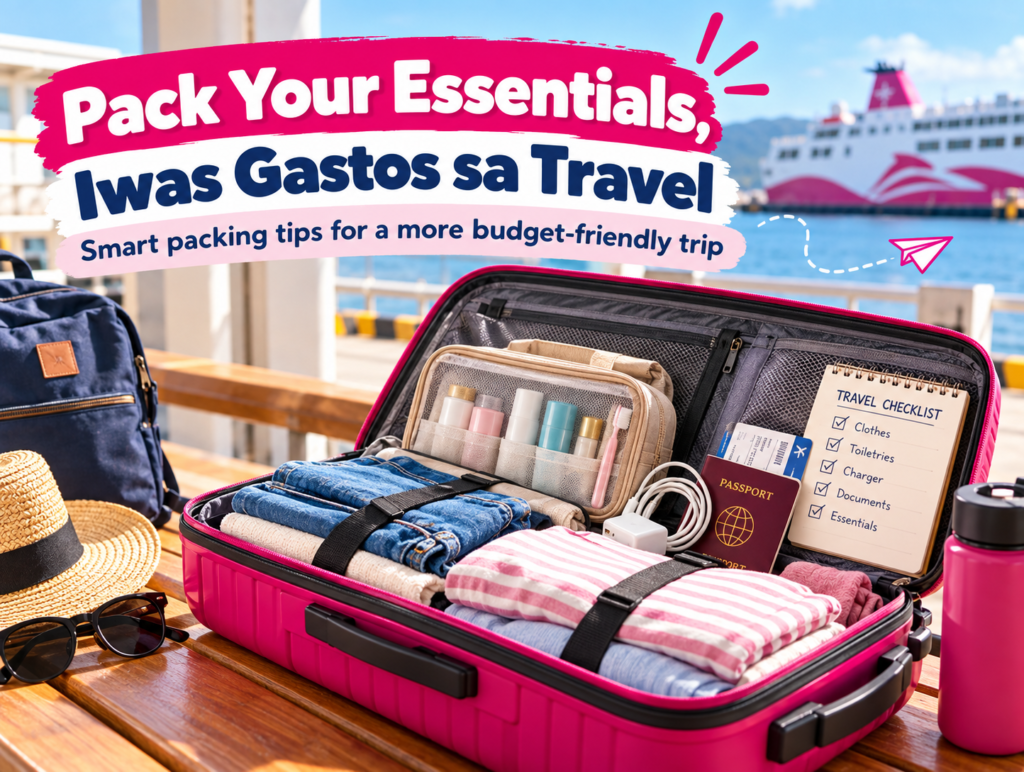
A practical packing-and-budget guide for Filipino travelers who want to keep more of their money for the actual trip.
| Quick Tipid Byahe Answer: Before leaving home, pack the items that are expensive or inconvenient to replace during a trip—IDs and booking details, chargers, toiletries, medicines, planned outfits, a few travel-day snacks, and a small hand-carry kit. A simple checklist can prevent “nakalimutan ko” purchases and help protect your budget for meals, local transportation, activities, and pasalubong. |
Sojourners! A promo fare can make a trip feel like a win before you even leave home. But there is another part of budget travel that is easy to overlook: the little expenses that start appearing because something important was left behind.
A forgotten charging cable, toothbrush, medicine, slippers, light jacket, or travel pouch may look like a small problem. Then you arrive at the terminal or destination and have to buy a replacement at whatever store is nearby. Do that several times on one trip and the money you saved on transportation can slowly disappear.
That is the idea behind this Tipid Byahe guide. Smart packing is not about bringing your entire house. It is about bringing the right essentials, keeping them organized, and knowing which items are worth preparing before you head to the port. This is especially useful for ferry passengers, because a long sea trip can mean hours away from your usual stores and routines.
The goal is simple: spend less on avoidable replacements so you can spend more on the parts of the trip that actually matter.
If you are preparing specifically for a 2GO trip, pair this money-saving checklist with our 2GO baggage allowance guide and our ferry essentials first-timers often forget. The three guides cover different parts of the same goal: arriving prepared without overpacking or overspending.
Why “Small” Forgotten Items Can Ruin a Tipid Travel Budget
Most people plan the obvious travel costs first: ticket, accommodation, local transportation, food, and activities. The problem is that forgotten-item spending rarely appears in the original budget. It happens one purchase at a time, usually when your choices are limited.
Maybe your phone is down to 10%, and your cable is still plugged in at home. Maybe you need toiletries before an overnight sailing. Maybe the weather changes and you have no light layer. Maybe you packed several outfits but forgot the medicine you normally carry. These situations can send you looking for the nearest convenience store, pharmacy, or accessories shop instead of enjoying the start of your trip.
The money matters, but so does the time. On a short vacation, even one unnecessary detour can eat into your itinerary. Preparing the basics at home gives you one less thing to worry about at the port and one more reason to relax once the trip begins.
1. Build Your Checklist Around the Trip, Not Around Your Closet
The easiest way to overpack is to open your cabinet and start adding items based on “baka kailanganin ko.” The better approach is to think through your actual journey from door to destination.
Ask yourself: How long is the trip? Will I be on an overnight ferry? Will I be walking a lot? Am I staying somewhere with basic toiletries? Will I swim, attend an event, visit a church, hike, or spend most of the time in the city? Once you know the activities, the packing list becomes much clearer.
Group your checklist into simple categories so nothing gets buried in your memory:
- Documents and money
- Clothing and footwear
- Toiletries and personal care
- Medicines and health items
- Phone, chargers, power bank, and other gadgets
- Food, water, and travel-day snacks
- Comfort items for the ferry, bus, or long transfer
- Destination-specific items such as swimwear, rain gear, or activity equipment
Tick an item only after it is physically inside the bag. “I know where it is” is not the same as “it is packed.” This one habit prevents chargers, toiletries, and medicine from being left in their usual places at home.
2. Keep IDs, Booking Details, Cash, and Cards in One Travel Pouch
Your most important items should be the easiest to reach. Keep your IDs, ticket or booking confirmation, wallet, cash, cards, and other required documents in a secure pouch or small organizer that stays with you.
It also helps to save screenshots or offline copies of your booking information. Mobile signal and data can be unreliable at exactly the moment you need to show a confirmation. A screenshot takes seconds to prepare and can save you from repeatedly refreshing an email or booking page at the terminal.
For cash, you do not need to carry a huge amount. The practical move is to have enough small bills for incidental expenses, local transportation, snacks, or places that may not accept cashless payments. Keep the rest secure and avoid placing all your money in one pocket or bag.
3. Pack the Toiletries You Already Own
Toiletries are classic “small gasto” items because people often remember them while using them, then forget to put them in the bag. Toothbrush, toothpaste, soap, shampoo, deodorant, skincare, sanitary products, tissue, wet wipes, and contact-lens supplies can quickly become a shopping list when left at home.
For a short trip, decant what you need into travel-size containers instead of bringing full bottles. Place liquids inside a waterproof pouch or resealable bag to avoid leaks. If your hotel or resort provides basic toiletries, check the inclusions in advance so you do not carry duplicates unnecessarily.
The goal is not to pack more—it is to pack deliberately. Bring the personal-care items that matter to you and skip the products you are unlikely to use.
4. Do a “Charging Station Sweep” Before You Leave
One of the most useful pre-trip habits is to check every place in your home where something is plugged in. Phone charger? Power bank cable? Watch charger? Camera battery? Earphones? Tablet? These are easy to forget because many are still being used on departure day.
A small tech pouch makes this much easier. Keep your charging cable, adapter, power bank, and earphones together. If you travel often, consider keeping a dedicated spare cable in that pouch so you are not constantly unplugging your everyday setup.
Charge your devices before leaving, especially for longer ferry or bus trips. Your phone may hold your booking details, maps, payment apps, emergency contacts, and entertainment. A working phone is not just a convenience; it is part of a smoother travel day.
5. Bring a Personal Medicine and Health Kit
A simple personal health kit can prevent a stressful search for a pharmacy while you are already in transit. Bring your regular prescription medicines in the appropriate containers and pack the personal health items you normally use and know are suitable for you.
You may also want basic supplies such as adhesive bandages, sanitizer, masks if you prefer them in crowded areas, and motion-sickness items if sea travel normally affects you. For medical or medication questions, follow your doctor or pharmacist’s advice rather than a generic online packing list.
The money-saving principle here is straightforward: if an essential health item is part of your normal routine, bring it from home instead of hoping you can easily find the same thing later.
6. Plan Complete Outfits So You Do Not Overpack
Overpacking and underpacking can both cost money. Too little preparation may lead to replacement purchases, while too much luggage can become heavy, difficult to manage, and potentially subject to extra baggage charges depending on the carrier and ticket conditions.
Instead of packing random clothes, plan complete outfits based on the number of days and the activities on your itinerary. Choose pieces that mix and match. Add sleepwear, underwear, the right shoes, and one activity-specific outfit only when you know you will use it.
Before closing your luggage, ask: “Will I realistically wear this on this trip?” If the answer is only “maybe,” it is a candidate to leave behind.
For ferry passengers, it is worth checking the latest luggage rules before departure. Our 2GO baggage allowance guide explains the current baggage-related details we have published, but carrier policies can change, so verify the latest conditions for your specific ticket as well.
7. Pack a Few Travel-Day Snacks—But Leave Room for Local Food
Tipid travel does not mean skipping the food you came to enjoy. A good compromise is to bring a few simple snacks for the waiting and transit portions of the trip, then save your appetite and budget for proper meals at the destination.
A small pack of biscuits, crackers, or another shelf-stable snack can be helpful during long queues, delayed departures, or early-morning travel. A reusable water bottle can also be practical where refilling is allowed. Choose items that are easy to carry, not messy, and appropriate for your travel conditions.
The purpose is to avoid buying something simply because you are suddenly hungry and there is only one expensive option nearby—not to turn your luggage into a grocery bag.
8. Create a Small Hand-Carry “Survival Kit”
Your large bag may not always be convenient to open during the journey, so keep the items you might need while in transit in a smaller hand-carry bag. For an overnight ferry or long bus ride, this can make a big difference.
A practical travel-day kit can include:
- Phone, wallet, IDs, and booking details
- Power bank and charging cable
- Regular medicines and personal health items
- Tissue, wet wipes, sanitizer, and a small toiletry pouch
- A light jacket, shawl, or other compact comfort layer
- Earphones and downloaded entertainment
- A light snack and water where allowed
- One small eco bag or resealable bag for unexpected needs
This setup helps you avoid opening your main luggage in a crowded terminal or shared travel space just to find one small item.
9. Bring Small Multipurpose Items That Prevent Bigger Hassles
Some of the best travel items are inexpensive, light, and useful in more than one situation. A foldable tote can carry groceries or pasalubong. A laundry bag keeps worn clothes separate. Resealable bags can hold wet items, snacks, toiletries, or small accessories. A compact umbrella can save you from buying one when the weather suddenly changes.
Think in terms of usefulness per item. If something solves several small problems and takes almost no space, it may deserve a place in your bag. If it is bulky and you are not sure you will use it, leave it at home.
10. Do a 15-Minute “Last Look” Before Leaving Home
Many forgotten essentials are not forgotten while packing—they are forgotten after packing. They are still in use: the toothbrush in the bathroom, the charger in the wall, the water bottle in the refrigerator, or the ID in yesterday’s wallet.
Before you lock the door, run through the same short sequence every time:
- Phone, wallet, IDs, keys
- Tickets or booking confirmations
- Medicines
- Chargers and power bank
- Toiletries still in the bathroom
- Snacks or drinks prepared in the kitchen
- Hand-carry bag and main luggage
- Departure terminal, schedule, and latest travel advisory
A repeatable routine is easier to remember than a long mental checklist. Think of it as your anti-“nakalimutan ko” tax.
Quick Tipid Byahe Packing Checklist for Filipino Travelers
Save this list on your phone and customize it for every trip:
- Valid ID and required travel documents
- Ticket/booking confirmation plus offline screenshot
- Cash, cards, and small bills for incidental expenses
- Phone, charging cable, adapter, power bank, earphones
- Toothbrush, toothpaste, soap, shampoo, deodorant, and personal-care items
- Prescription medicines and your usual personal health supplies
- Clothes planned by day and activity
- Sleepwear, underwear, and comfortable footwear
- Light jacket/shawl / compact comfort layer for long trips
- A few travel-day snacks and a reusable bottle when practical
- Tissue, wipes, sanitizer, resealable bags, laundry bag
- Small umbrella or weather-appropriate gear
- Eco bag or foldable tote for pasalubong and return-trip extras
- Child-care, senior-care, accessibility, or other group-specific essentials
How This Fits a 2GO Promo Fare Trip
Finding a low fare is only one part of a tipid trip. The next step is protecting those savings. If you book a discounted sailing but spend unnecessarily on forgotten basics, excess baggage, last-minute convenience purchases, or items you already own at home, the real cost of the trip starts creeping up.
A better sequence is: find a fare that works, confirm your route and sailing details, review baggage rules, build a trip-specific checklist, and pack your travel-day essentials where they are easy to reach. That way, your transport savings have a better chance of staying in your pocket.
Before your next trip, check the latest promo fare posts, browse the latest shipping schedule guides, and use our Travel Guide section to plan the rest of your itinerary. Your fare, schedule, and packing plan should work together—not as separate last-minute tasks.
Frequently Asked Questions
How can I save money when packing for a ferry trip?
Bring the essentials you already own, plan outfits instead of packing random clothes, keep chargers and medicines in dedicated pouches, and check baggage rules before leaving home. The goal is to avoid replacement purchases and unnecessary excess luggage.
What should I keep in my hand-carry bag?
Keep your ID, booking details, wallet, phone, power bank, regular medicine, basic toiletries, tissue or wipes, and a few comfort items you may need during the trip. Anything important or difficult to replace should stay with you rather than at the bottom of your main luggage.
Should I bring food on a long ferry trip?
A few simple travel-day snacks can help during queues or long waits, but packing should still follow the carrier’s current rules. Bring only what is practical, easy to store, and appropriate for your trip.
How do I avoid overpacking?
Plan your itinerary first, then pack complete outfits and trip-specific items. If you cannot identify when you will use something, consider leaving it behind. Check your accommodation amenities so you do not bring unnecessary duplicates.
Where can I check current 2GO baggage and travel information?
Use current route, baggage, and promo guides as planning references, then verify time-sensitive details with the transport provider before departure because schedules, fares, terminal instructions, and baggage policies can change.
Final Tip: Pack the Savings With You
Sojourners, the best tipid-byahe habits are usually simple. A checklist does not cost anything. Putting your charger in a pouch takes seconds. Planning your outfits takes a few minutes. Checking baggage and sailing information before you leave can prevent a much bigger hassle at the port.
The reward is not only a lighter travel bill. It is a smoother start to the trip. Less time searching for forgotten items means more time enjoying the destination. Less money spent replacing things you already own means more budget for local food, sightseeing, family time, and pasalubong.
Before your next ferry trip, do one final check: documents, charger, medicine, toiletries, planned clothes, travel-day kit. If those are ready, you have already done one of the easiest things you can do to make the trip more organized—and more sulit.
| Travel Reminder: Schedules, fares, terminal procedures, baggage rules, and other carrier policies can change. Always confirm the latest details for your specific trip before departure. |
For more 2GO Travel schedules, promo fares, ferry updates, and Philippine travel deals, follow us on Facebook: 2Go Promo Fares!