You found a promo fare. You booked your 2GO Travel ticket from Manila to Cebu for a fraction of the flight price. Now you are standing on the gangway at Pier 4 in Tondo, hauling your bags toward a 22-hour crossing, and somewhere between the excitement and the sea breeze is a nagging feeling you forgot something.
You probably did.
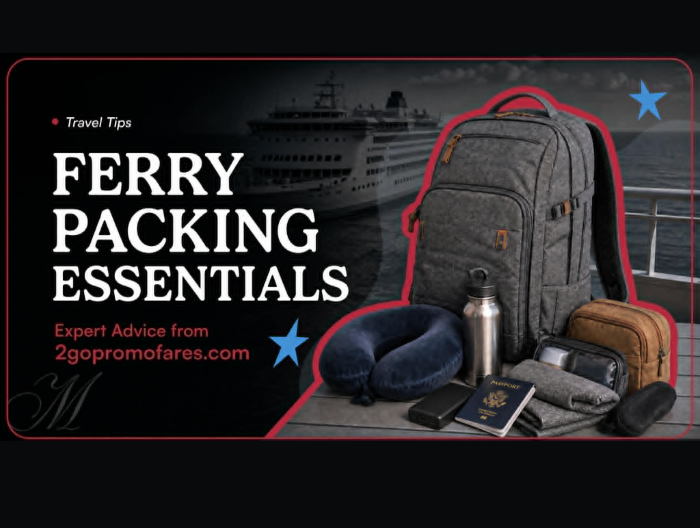
First-time ferry passengers and experienced sojourners live in completely different worlds on board a 2GO ship. The difference is not money or cabin class. It is nine simple items that veterans always pack, and newcomers always skip. This guide covers every one of them, explains why each matters, and tells you exactly where to get them before you sail.
Quick Question: What do I need to pack for a 2GO ferry trip in the Philippines?
Pack a warm layer (jacket or malong); a power bank with an extension cord; a padlock; Bonamine for motion sickness; snacks and a refillable water bottle; toilet paper and wet wipes; earplugs and an eye mask; a valid government ID with a printed e-ticket and small bills; and offline entertainment downloaded in advance.
1. A Warm Layer: Jacket, Hoodie, or Malong
The number one most-forgotten item on a 2GO ferry is a warm layer. Air-conditioned tourist, cabin, business, and suite classes can feel as cold as a cinema on a rainy afternoon, and the standard bunk bedding is a thin sheet and one pillowcase. Blanket rentals are available at around 50 pesos with a deposit, but they sell out fast on packed voyages.
A fleece jacket or hoodie works in air-conditioned decks. A malong is the more versatile choice: it folds into a pillow, drapes as a blanket on any class, including open-air Super Value decks where there is no air-conditioning but a strong night sea breeze, and doubles as a privacy wrap in shared bunk areas.
Experienced 2GO passengers often pack both: a thin hoodie for the cabin and a malong for multipurpose use throughout the voyage.
2. A Power Bank and Short Extension Cord
Tourist Class and Super Value bunks have no personal power outlets. There are communal charging stations on board, but they operate on a coin system at roughly 5 pesos per 10 minutes. On a 22-hour Manila to Cebu crossing or a 48-hour Manila to Cagayan de Oro voyage, a single smartphone charge costs 60 to 80 pesos at the station.
The smarter move is a 20,000 mAh power bank. Cabin Class passengers get wall sockets near their berths, but the outlets are often in awkward positions. A compact 2- or 3-outlet extension cord solves this and lets your bunkmates charge alongside you, which earns significant goodwill on a two-day crossing.
3. A Padlock for Your Bags
Tourist Class accommodates up to 16 passengers per bunk area in an open layout with no individual lockers. Overnight crossings mean hours of sleep in a shared space with strangers. Frequent ferry passengers lock zippers on all checked bags and keep a small personal daypack on their body at all times, containing their phone, cash, government ID, e-ticket printout, and any medications.
A TSA-compatible combination padlock weighs less than 100 grams and costs under 200 pesos at any SM or Puregold. It is the cheapest peace of mind you will buy for the whole trip.
4. Bonamine (Meclizine) for Motion Sickness
Bonamine is the Filipino go-to for seasickness, and it is sold over the counter at every Mercury Drug and Watsons branch nationwide. The active ingredient is meclizine 25 mg, which works as a prevention rather than a treatment. Take one tablet 30 to 60 minutes before boarding, not after you are already queasy.
Open-sea routes such as Manila to Coron, Manila to Cagayan de Oro, and Batangas to Caticlan can get rocky during the habagat southwest monsoon season from June to October and on the fringes of tropical low-pressure systems. Even passengers who have never experienced motion sickness on land can feel the difference at sea. One tablet covers 24 hours with less drowsiness than the older Dramamine formula.
Pack extra tablets for travel companions who are first-timers, and bring ginger candy as a secondary remedy for mild queasiness that sets in later in the voyage.
5. Snacks, Instant Noodles, and a Refillable Water Bottle
Onboard food at the 2GO cafeteria and canteen is priced at nearly double or triple land rates. A cup of rice plus one viand runs 120 to 180 pesos when the same meal costs 60 pesos in a carinderia near the port. The ship has free hot water dispensers on every deck, so a supply of instant cup noodles, Skyflakes, Oishi snacks, biscuits, and powdered juice makes a genuine dent in travel costs on a 48-hour crossing.
A 1-liter refillable tumbler filled at the free dispensers saves 30 to 50 pesos per bottled water purchase. On a 2-day voyage for a family of four, the savings from packing your own food and drink can exceed 2,000 pesos.
6. Toilet Paper, Wet Wipes, and Hand Sanitizer
Shared bathrooms in Super Value, Mega Value, and Tourist Class regularly run out of tissue during peak voyages, especially during the first six to eight hours after departure when usage is highest. Non-functional bidets and water interruptions at certain hours are documented in passenger reviews across Tripadvisor, Reddit Philippines, and travel blogs.
A travel pack of wet wipes also lets you do a quick freshening-up between shower opportunities when bathroom queues are long. Hand sanitizer is useful throughout the voyage, given that dozens of passengers share surfaces in common areas.
7. Earplugs and an Eye Mask
Shared bunk areas on 2GO ferries are rarely dark or quiet. Ceiling lights stay on at reduced brightness through the night, mounted televisions play movies and news programs until the early hours, and onboard live entertainment bands and karaoke sessions typically run until midnight or later. Passengers in neighboring bunks may snore, take phone calls, or keep flashlights on.
Foam earplugs cost less than 50 pesos for a pack of 10 pairs. A basic sleep mask costs under 100 pesos. Together, they are the cheapest comfort upgrade available for a long overnight crossing, far cheaper than the price difference between Tourist Class and a private cabin.
8. Valid Government ID, Printed E-Ticket, and Small Bills
2GO Travel requires a valid government-issued ID for boarding. Accepted IDs include a passport, driver’s license, UMID, PhilSys National ID, postal ID, and similar documents. An e-ticket shown only on a phone screen is not always accepted without a printed copy at the Pier 4 gangway, particularly during peak sailings when boarding staff process hundreds of passengers quickly.
Small bills matter more than most travelers expect. Port area porters (habal-habal and pushcart operators) charge 200 to 250 pesos per trip regardless of bag size. Terminal taxis from Pier 4 to nearby LRT stations rarely have change for 500-peso bills. Coin-operated charging stations, onboard canteen purchases, and cold-water buys all run smoother with 20 and 50 peso coins and 100-peso bills ready.
9. Offline Entertainment
Mobile signal disappears for roughly 70 percent of a long inter-island voyage. The open sea between Luzon and Visayas has limited cell tower coverage, and onboard Wi-Fi is restricted to select newer vessels and is typically available only in Business Class and Suite Class areas. Even where Wi-Fi exists, streaming reliably at sea is rare.
Frequent passengers download their Netflix queue, a Spotify playlist, an ebook or two on Kindle, and a podcast backlog before heading to Pier 4. Wired earphones are more reliable than Bluetooth on ships due to electromagnetic interference from navigation equipment. A tablet or e-reader with a fully charged battery and 4 to 8 hours of offline media makes even a 48-hour crossing feel surprisingly fast.
|
Bonus: Veteran Packing Tips Quick-dry microfiber travel towel (towel rental is 40 pesos with deposit, but often runs out) Tsinelas or flip-flops are dedicated to shared bathroom use only Zip-lock plastic bags or a small dry bag for wet swimwear or clothes Personal medication kit: paracetamol, loperamide (Diatabs), antihistamine (Loratadine) Inflatable neck pillows, as bunk pillows, are thin, and the frames are firm Foldable fan for Super Value and Mega Value decks, where only natural ventilation applies during daytime port stops |
Pro Tips from Frequent 2GO Passengers
- Book the upgrade to Tourist Class or above on crossings longer than 20 hours. The Super Value experience on a first Manila to Cebu crossing discourages many travelers from ever taking the ferry again.
- Choose a lower-deck, mid-ship bunk to minimize seasickness. Bow and stern berths feel the most motion.
- Agree on the porter fee before they touch your bag at Pier 4. The standard rate is 200 to 250 pesos per trip to your assigned deck.
- Arrive at Pier 4 at least 4 hours before departure. During Holy Week, Christmas, and Undas seasons, arrive 6 hours early.
- Rent the linen set (blanket plus pillowcase) the moment you find your bunk. Stocks run out on fully booked sailings.
- Time your meals around the strict cafeteria schedule: Breakfast 6 to 8 AM, Lunch 11 AM to 1 PM, and Dinner 6 to 8 PM. Outside these windows, the cafeteria closes.
- Monitor the 2GO Travel Advisories page at travel.2go.com.ph 48 hours before departure for weather-related delays, especially during typhoon season.
Frequently Asked Questions
What is the baggage allowance on 2GO Travel ferries?
2GO Travel allows 50 kilograms of baggage per passenger. Items beyond this limit are subject to excess baggage fees charged at the port. Bring a luggage scale to the port to avoid surprises at check-in.
Can I bring food on a 2GO ferry?
Yes, passengers may bring their own food and beverages. The ship has free hot water dispensers on all decks, making instant noodles, oatmeal, and powdered drinks practical choices. Avoid strong-smelling food in enclosed shared cabin areas out of consideration for fellow passengers.
Is there Wi-Fi on 2GO Travel ferries?
Wi-Fi availability varies by vessel. Select newer 2GO ships offer onboard Wi-Fi, typically accessible in business class and suite areas. The signal is intermittent at open sea. Most passengers on long crossings rely on downloaded offline content for entertainment.
What should I do if I get seasick on a 2GO ferry?
Take one Bonamine (meclizine 25 mg) tablet 30 to 60 minutes before boarding to prevent nausea before it starts. If you are already on board and feeling queasy, move to a midship lower deck, stay hydrated with plain water, avoid reading screens, and focus your gaze on the horizon if you can access an outer deck.
Are blankets and towels provided on 2GO ferries?
Blanket and linen rentals are available on board at approximately 50 pesos for a blanket set and 40 pesos for a towel, plus a refundable deposit. They are not automatically included in base fares. Bring your own to be safe, as rental stocks run out on fully booked sailings.
Do I need a printed ticket to board a 2GO ferry?
Yes. While the 2GO app generates a QR code on your phone, having a printed copy of your e-ticket is strongly recommended. Boarding staff process large crowds quickly, and a physical printout speeds up verification. Government-issued ID is required alongside the ticket.
Conclusion
The difference between a miserable 22-hour crossing and a comfortable one almost always comes down to preparation, not cabin class. A warm jacket, a power bank, a padlock, Bonamine, your own snacks, a roll of tissue, earplugs, your printed ticket with ID, and a phone loaded with offline entertainment cost less than 1,000 pesos combined and transform the entire 2GO ferry experience.
Ready to book? Check the latest 2GO Travel promo fares on 2gopromofares.com, and read our companion guide on the 7 biggest booking mistakes passengers make so you score the best rate with no regrets.